
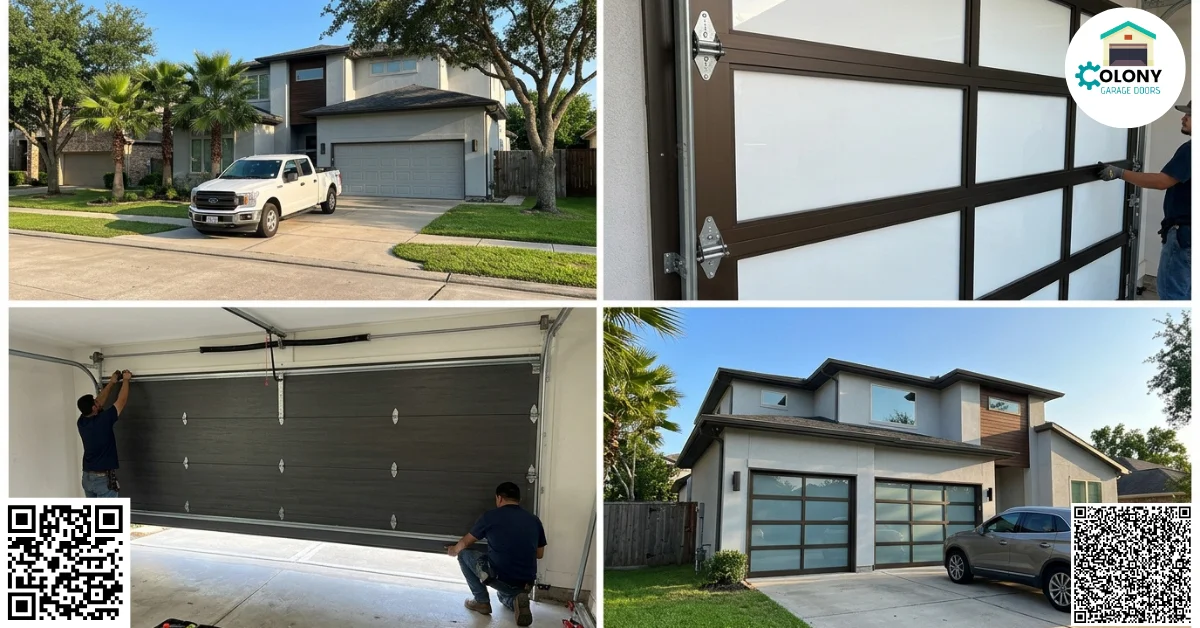

Transforming Your Sugar Land Home From the Outside In
Think about the front of your home for a second. What is the largest moving part on your entire property? For most homeowners right here in Sugar Land, Texas, it is the garage door. It takes up to 30% to 40% of what people see from the street. Yet, many of us do not give it a second thought until it starts making an awful grinding noise, gets stuck halfway up during a thunderstorm, or completely gives out right when you are rushing to take the kids to school or heading out to the Smart Financial Centre for a concert.
If you are living in beautiful neighborhoods like First Colony, Sweetwater, Greatwood, or New Territory, you know that keeping up your home's curb appeal is a big deal. But a new garage door is not just about making your house look pretty for the neighbors. It is a major investment in your home’s security, energy efficiency, and everyday convenience.
When it comes to garage door installation, you cannot afford to cut corners. The brutal Texas heat, heavy humidity, and sudden coastal storms mean your garage door has to work hard day in and day out.
As an expert technician with 15 years of hands-on experience in the garage door industry, I have seen it all. I have fixed doors bent in half by heavy winds, replaced snapped springs that sounded like gunshots when they broke, and helped hundreds of local families choose the perfect door for their homes.
In this comprehensive guide, we will walk through everything you need to know about picking, installing, and maintaining a new garage door in Sugar Land, Texas. From materials and styles to insulation and local building rules, consider this your ultimate masterclass.
Why Modern Garage Door Installation Matters for Sugar Land Homeowners
If your current garage door is more than 15 years old, it is likely costing you money and putting your home at risk. Older doors lack the advanced safety features, robust security locks, and high-tech insulation properties of modern systems. Let’s look at the primary reasons why investing in a professional setup is one of the smartest home improvement decisions you can make.
Boosting Your Home’s Curb Appeal and Resale Value
According to nationwide real estate data, replacing an old garage door ranks as one of the top home improvement projects for return on investment (ROI). In fact, homeowners often recoup over 90% to 100% of the project's cost when they sell their house. A beautiful, clean, modern door instantly makes your whole property look refreshed and well-maintained. Whether you prefer a classic raised-panel look, a rustic carriage-house style, or a sleek glass-and-aluminum modern design, the right door ties your home’s architecture together perfectly.
Slashing Your Energy Bills in the Texas Heat
Sugar Land summers are legendary for their intense heat and suffocating humidity. If you have an attached garage, that space acts like a giant oven. Heat radiates through an uninsulated garage door, raising the temperature inside to well over 100°F. This heat then bleeds through the interior walls and ceiling, forcing your home's air conditioning system to work twice as hard to keep your living spaces cool. Modern insulated garage doors act as a barrier, keeping the heat outside where it belongs and lowering your monthly electricity bills.
Keeping Your Family and Belongings Secure
Your garage door is a primary entry point into your home. Burglars look for old, flimsy doors with outdated opener systems because they are incredibly easy to force open. Modern garage doors are built with high-strength steel, advanced locking mechanisms, and smart openers that feature rolling-code technology. This means the digital code changes every single time you use your remote control, preventing tech-savvy thieves from duplicating your signal.
Choosing the Right Garage Door Material: Pros, Cons, and Local Fit
The material you choose for your garage door installation dictates how long the door will last, how much maintenance it will require, and how well it will withstand our local climate. Let’s break down the most popular options available today.
1. Steel Garage Doors: The Ultimate All-Rounder
Steel is by far the most popular material for modern garage doors, and for good reason. It is tough, long-lasting, relatively affordable, and requires very little maintenance.
- The Structure: High-quality steel doors are built in layers. A single-layer door is just a sheet of steel. A double-layer door adds a layer of insulation behind the steel. A triple-layer door (often called a sandwich door) features insulation packed tightly between two sheets of steel. This triple-layer design offers incredible strength and energy savings.
- The Sugar Land View: Steel doors perform beautifully in our climate, provided they are treated with a factory-applied, rust-resistant coating. Because our humidity is high, you want a door with a galvanized steel skin to prevent rust from forming around the bottom panels where rainwater splashes.
2. Wood Garage Doors: Timeless Natural Beauty
Nothing matches the rich, authentic look of a real wood garage door. Built from durable woods like cedar, redwood, or hemlock, these doors add instant luxury and warmth to custom homes.
- The Catch: Real wood requires a high level of commitment. The intense Texas sun can bake the finish away, while the high humidity can cause the wood to warp, swell, or rot if it isn't sealed regularly.
- The Maintenance: If you choose real wood, be prepared to restain or repaint the door every 2 to 3 years to keep moisture out.
3. Faux Wood (Composite) Doors: The Best of Both Worlds
If you absolutely love the look of real wood but hate the idea of spending your weekends sanding and painting, wood-composite is your answer. These doors use a durable steel core for strength and insulation, topped with a fiber-fiberglass or polymer overlay molded from real wood planks.
- The Benefits: They mimic the grain, texture, and color of real wood perfectly, but they won't rot, warp, split, or crack. They are highly resistant to moisture, making them an exceptional choice for the damp Sugar Land environment.
4. Aluminum and Glass Doors: For the Modern Aesthetic
If your home features a sleek, contemporary design with sharp lines and big windows, an aluminum and glass door is a striking option.
- The Design: These doors feature a lightweight, rust-proof aluminum frame fitted with large glass panels. You can choose clear glass, frosted glass for privacy, or tinted glass to block out the sun's glare.
- The Consideration: While beautiful, glass doors offer less insulation value than solid steel or composite doors, meaning they are best suited for homeowners who prioritize aesthetics over pure energy efficiency.
Understanding Insulation: R-Values and U-Factors
When looking at doors for a new garage door installation, you will constantly see references to "R-value." Let's demystify what this actually means so you can make an educated choice.
What is an R-Value?
An R-value is a measurement of thermal resistance. In simple terms, it tells you how good a material is at stopping heat from moving through it. The higher the R-value number, the better the door is at insulating your home.
- R-6 to R-9: Good for detached garages or areas with mild climates.
- R-10 to R-13: Highly recommended for attached garages in Sugar Land. It provides a strong barrier against summer heat.
- R-14 and Above: Premium insulation levels that offer maximum climate control and noise reduction.
Polystyrene vs. Polyurethane Insulation
Manufacturers use two main types of insulation inside garage door panels:
Insulation Type | How It’s Made | Performance Character |
Polystyrene | Rigid foam sheets inserted by hand into the door panel gaps. | Affordable, reliable, but leaves small air pockets inside the panel. |
Polyurethane | Liquid foam injected directly into the panel, expanding to fill every nook. | Denser, stronger, bonds to the steel frame, higher R-values per inch. |
For homeowners in Fort Bend County, we highly recommend choosing polyurethane insulation. It doesn't just block the outdoor heat better; it also makes the door significantly quieter and sturdier, which means it won't rattle and shake when the wind picks up during storm season.
Selecting the Perfect Style for Sugar Land Architecture
Our community boasts a wide variety of architectural designs, from classic brick traditional homes to Mediterranean-inspired estates and ultra-modern developments. Matching your garage door style to your home's architecture is key to achieving a cohesive design.
Traditional Raised-Panel Doors
This is the classic look most people think of when they imagine a garage door. It features symmetrical, clean rectangular panels built into the door face. These doors are incredibly versatile and look great on traditional brick ranch homes, colonial styles, and standard suburban properties throughout neighborhoods like Commonwealth and Telfair.
Carriage-House Style Doors
Carriage doors give your home a charming, historic look reminiscent of old country estates or stable houses. While they look like they swing open from the middle using handles, they actually roll straight up like a standard modern door. They feature beautiful hardware like decorative handles, faux hinges, and elegant window grilles across the top section. This style perfectly complements craftsman-style homes, farmhouses, and large traditional properties.
Flush or Long-Panel Contemporary Doors
If your home has clean geometric lines, large windows, and minimal extra decoration, a flush-panel door is the way to go. These doors feature completely flat panels with no raised details. They can be painted solid colors or given a sleek metallic or faux-wood finish. Placing vertical windows down one side of the door creates an eye-catching, high-end look.
The Critical Role of the Garage Door Opener
A beautiful door is useless without a reliable, heavy-duty opener to lift it. When undergoing a new garage door installation, it is usually the ideal time to upgrade your opener to ensure it matches the weight and balance of your new door.
Chain-Drive Openers: Reliable and Affordable
Chain-drive openers use a heavy metal chain—much like a bicycle chain—to pull the door up and down along a rail.
- Pros: They are incredibly strong, durable, and budget-friendly.
- Cons: They are noisy. The metal-on-metal contact creates a loud chattering sound, making them a poor choice if your garage sits directly below a bedroom or nursery.
Belt-Drive Openers: Whisper-Quiet Operation
Belt-drive openers replace the metal chain with a flexible, steel-reinforced rubber or polyurethane belt.
- Pros: They are virtually silent. The door glides up and down with a smooth, quiet hum.
- Cons: They cost slightly more than chain-drive models. However, for homes with attached living spaces, the peace and quiet are well worth the investment.
Wall-Mount (Jackshaft) Openers: Space-Saving Innovation
Unlike traditional openers that hang from the ceiling right in the middle of your garage, wall-mount openers install directly to the side of the garage door torsion shaft on the wall.
- Pros: This completely clears up your ceiling space, giving you extra room for overhead storage racks, high-clearance vehicles, or bright shop lighting. They are also incredibly quiet and feature automatic deadbolt locks that secure the door directly to the track when closed.
Smart Home Features You Don't Want to Skip
Modern garage door openers from top brands come standard with built-in Wi-Fi connectivity. Using dedicated smartphone apps, you can:
- Open or close your door from anywhere in the world.
- Receive real-time alerts if your door is left open for too long.
- Set schedules to ensure the door automatically locks at 10:00 PM every night.
- Grant temporary access codes to delivery drivers, housekeepers, or neighbors checking on your pets.
The Anatomy of a Garage Door System
To appreciate why professional installation is so important, it helps to understand all the intricate pieces that must work together perfectly for a door to operate safely.
+-----------------------------------------------------------+
| Torsion Spring |
| [=======================|=======================] |
| Bearing Plates |
+-----------------------------------------------------------+
| |
| Track | Track
| |
+-----------------------------------------------------------+
| [ ] [ ] [ ] [ ] Top Door Panel (with Windows) [ ] [ ] |
+-----------------------------------------------------------+
| [ ] [ ] [ ] [ ] Middle Door Panel [ ] [ ] |
+-----------------------------------------------------------+
| [ ] [ ] [ ] [ ] Bottom Door Panel [ ] [ ] |
+-----------------------------------------------------------+
| |
======= Safety Eye (Sender) . . . . . . . Safety Eye (Receiver) =======
The Tracks: Heavy-gauge steel tracks guide the door's rollers smoothly from a vertical position (when closed) to a horizontal position (when open). If these tracks are even a fraction of an inch out of alignment, the door will bind, scrape, or jam.- The Rollers: Small wheels attached to the sides of the door panels that ride inside the tracks. High-quality nylon rollers with sealed ball bearings last much longer and run far quieter than cheap steel rollers.
- The Cables: High-tensile aircraft cables run from the bottom brackets of the door up to the cable drums at the top. These cables pull the full weight of the door up when the springs unwind.
- The Springs: This is where the heavy lifting happens. Your garage door can weigh anywhere from 150 to over 400 pounds. The electric opener doesn't do the heavy lifting; the springs do.
Torsion Springs vs. Extension Springs: Safety and Engineering
There are two primary spring systems used in residential properties. Understanding the difference is vital for your safety.
Extension Springs
Extension springs run horizontally along the overhead tracks on both sides of the door. When the door closes, these springs stretch out long to store energy.
- The Risk: Because they stretch and compress constantly, extension springs are prone to fatigue. If an old extension spring snaps without a safety cable running through the middle of it, it turns into a lethal projectile that can easily shatter a car window, puncture drywall, or cause severe bodily harm.
Torsion Springs
Torsion springs are mounted on a solid metal shaft directly above the center of the garage door opening. Instead of stretching, they twist tightly to store torque.
- The Advantage: When a torsion spring breaks, it stays safely locked on the metal shaft, accompanied by a loud bang but minimal flying debris. Torsion springs distribute the weight of the door much more evenly, ensuring smooth operation and putting far less stress on your electric opener. At Colony Garage Doors, we prioritize high-cycle torsion springs for our garage door installation projects because they are significantly safer and last much longer.
Real-World Troubleshooting: Diagnosing Common Garage Door Issues
Even with a brand-new system, everyday life happens. Knowing how to identify problems early can prevent small hiccups from turning into expensive, emergency repairs. Here is a handy guide based on what our technicians encounter most frequently in the field.
Scenario A: The Door Starts Down, Then Reverses and Blinks
- The Symptoms: You press your wall button or remote control. The door moves down an inch or two, stops, reverses back to the fully open position, and the light bulbs on your overhead opener start flashing repeatedly.
- The Root Cause: This is almost always an issue with your safety reversal eyes. These are the small electronic sensors located about six inches off the ground on either side of your garage door tracks. They project an invisible infrared beam across the opening. If that beam is broken, the door will refuse to close to prevent crushing an object, a pet, or a person.
- The Actionable Fix: First, look to see if a trash can, broom handle, or kids' toy is physically blocking the path between the sensors. If the path is clear, look at the small LED lights on the sensors themselves. One should be solid green, and the other should be solid amber/red. If one is blinking or completely dark, the sensors are misaligned. Gently knock the sensor bracket back with your hand until both lights glow steadily without blinking. Finally, take a soft microfiber cloth and wipe away any dust, dirt, or spiderwebs covering the plastic sensor lenses.
Scenario B: The Opener Groans and Hums, But the Door Won't Lift
- The Symptoms: You press the button, you hear the electric motor humming loudly up on the ceiling, but the door doesn't move a single inch. It looks like it is glued to the garage floor.
- The Root Cause: Your garage door spring has likely snapped. Look up at the wall above your closed garage door. If you see a clean, 2-inch gap in the middle of the heavy black metal spring coiled around the shaft, the spring is broken. Without the spring's torque, the door is dead weight, and your opener is not strong enough to lift it alone.
- The Actionable Fix: Stop pressing the button immediately. Continually running the opener when a spring is broken will burn out the motor gears, turning a simple spring replacement into a full opener replacement. Never attempt to change a garage door spring yourself. The immense tension stored in these components can cause life-threatening injuries without specialized professional tools. Call a licensed professional to handle the swap safely.
Scenario C: The Door Rides Crookedly in the Tracks
- The Symptoms: As the door raises or lowers, one side hangs noticeably lower than the other. The door looks tilted, scrapes against the frame, and jams tightly before reaching the ground.
- The Root Cause: This usually indicates a thrown or slipped cable. Over time, or if the door hits an obstacle while closing, the aircraft lifting cables can jump out of the grooves on the top winding drums. When one cable loses its tension, the door drops on that side.
- The Actionable Fix: Do not pull the manual emergency release cord (the red rope) while the door is jammed or crooked. If you release the door while it is unbalanced, it could crash down with tremendous force, destroying your tracks and breaking the door panels. Keep your vehicles and family members clear of the area and call for immediate service.
Actionable DIY Maintenance Tasks for Homeowners
While major repairs and garage door installation require professional training, you can easily extend the lifespan of your system by performing a quick, 10-minute maintenance check every six months.
1. Perform a Monthly Visual Inspection
Stand inside your garage with the door closed. Take a close look at all the hardware components:
- Look for frayed, rusty, or unraveling steel cables near the bottom brackets.
- Check for missing bolts or loose nuts on the hinges connecting the door panels.
- Examine the tracks for any large dents, bends, or obstructions.
2. The 3-In-1 Lubrication Routine
A noisy garage door is a cry for help. Lubricating moving metal parts prevents friction, reduces wear and tear, and keeps your system quiet.
- What to Use: Use a dedicated silicone-based or lithium-based spray lubricant. Never use standard WD-40. While WD-40 is great for loosening stuck bolts, it is a degreaser, not a long-term lubricant. It will actually strip away the factory grease, attract thick layers of dirt and grit, and make your door louder over time.
- Where to Spray: Lightly spray the metal hinges where they pivot, the roller stems where they insert into the hinges, and the bearing plates at the ends of the torsion shaft. Do not lubricate the inside of the tracks; spraying the tracks makes them slick, causing the rollers to slide and skid rather than turn smoothly.
3. Conduct a Safety Balance Test
To check if your door is properly balanced by its springs, follow these simple steps:
- Close the garage door completely.
- Disconnect the door from the electric opener by pulling down on the red emergency release rope.
- Grip the handle at the bottom of the door and lift it up manually. It should lift easily with one hand.
- Raise the door halfway up and let go.
The Balance Rule: A perfectly balanced door will stay hovering in place around the midway mark, or drift up or down very slowly. If the door instantly crashes down violently to the floor, or flies straight up into the air, the spring tension is incorrect. This puts severe strain on your opener and needs adjustment by a technician.
4. Test the Safety Reversal System
To ensure your door will protect your family and vehicles from an accidental crush, perform this quick test:
- Open your garage door completely.
- Place a flat, solid object (like a 2x4 block of wood or a thick roll of paper towels) on the garage floor directly in the center of the opening.
- Press the wall button to close the door.
- When the bottom edge of the door hits the object, it should immediately stop and reverse back up to the open position within two seconds. If it keeps pressing down and squishing the object, the opener's downward force limits need to be adjusted.
Navigating Sugar Land Homeowner Association (HOA) Guidelines
If you live in a master-planned community in Sugar Land, you are likely very familiar with Homeowner Associations (HOAs). Communities like First Colony, Greatwood, and New Territory have strict rules regarding the exterior appearance of your property. Before scheduling your garage door installation, it is vital to check your local covenants.
Color and Style Constraints
Most local HOAs require your garage door color to match or complement the existing trim or main paint color of your house. Earth tones, creams, muted whites, and soft grays are generally accepted, while bright, non-traditional colors are strictly banned. Similarly, some neighborhoods prohibit modern glass-and-aluminum doors if the rest of the community is strictly traditional or colonial architecture.
The HOA Architectural Review Application
Before buying a new door, you will typically need to submit a brief application to your HOA’s Architectural Review Committee (ARC). This application usually requires:
- A brochure or photo showing the exact style and model of the door you want to install.
- A sample or description of the final paint or stain color.
- A sketch or photo showing where any windows will be placed on the door.
At Colony Garage Doors, we regularly work with local HOAs. We can provide you with all the official product spec sheets, color codes, and technical drawings you need to get your application approved quickly without any stressful back-and-forth.
Why Professional Installation Beats a Dangerous DIY Project
With so many instructional videos online, it can be tempting to buy a garage door from a big-box home improvement store and try to hang it yourself over a weekend. However, garage door installation is a highly technical, dangerous task that is best left to experienced specialists.
The Real Danger of High-Tension Springs
As mentioned earlier, garage door springs store an incredible amount of mechanical energy. To wind a torsion spring properly, a technician must use specialized steel winding bars while standing on a ladder. One slip of a tool or an incorrect turn can cause the spring to release its energy instantly, shattering hands, fracturing wrists, or worse. Professional technicians undergo rigorous safety training to handle these components without risk.
The Precision Alignment Challenge
A garage door system consists of hundreds of moving parts that must operate within exact tolerances. If your tracks are off by even a quarter of an inch, or if the vertical tracks aren't perfectly plumb, the door panels will experience uneven friction. This causes the door to wear down prematurely, puts extra load on the electric motor, and can eventually cause the door to twist and jump out of its tracks entirely, rendering it completely useless.
Preserving Your Manufacturer's Warranty
High-quality garage doors come backed by long-term manufacturer warranties that protect you against structural defects, rust, or paint peeling. However, almost all top-tier brands include a strict clause stating that the warranty is only valid if the door is installed by a licensed, professional garage door company. If you install it yourself and make a minor mistake that damages a panel, you will be stuck paying for the replacement parts entirely out of pocket.
What to Expect During Your Installation Day
When you choose a trusted local partner for your garage door upgrade, the entire process is smooth, clean, and stress-free. Here is a brief look at how a typical installation day unfolds:
- Arriving and Preparing: The technicians arrive with a truck fully stocked with your new door panels, tracks, springs, and hardware. They will carefully park in your driveway and review the project plan with you before getting started.
- Tear-Down and Disposal: The team carefully unwinds the old springs to remove all tension. They then disassemble the old door panels one by one, take down the old tracks, and load everything into their truck for proper recycling and eco-friendly disposal.
- Hanging the New Tracks and Framework: The technicians install fresh vertical and horizontal steel tracks, ensuring everything is perfectly level, square, and structurally secure against your garage framing.
- Assembling the Panels: The new door panels are fitted with hinges, handles, and top-tier rollers, then stacked carefully into the tracks from the bottom up.
- Installing and Calibrating the Springs: The proper torsion spring system is mounted to the header wall, connected to the lifting cables, and wound to the exact specifications required to perfectly balance the weight of your specific door.
- Hooking Up the Opener and Safety Sensors: The electric opener is mounted, fine-tuned, and connected to the door. Brand-new safety sensors are wired up along the floor and aligned flawlessly.
- Final Quality Control Check and Cleanup: The installation team runs the door through multiple cycles to ensure whisper-quiet, smooth operation. They sweep your entire garage floor to remove any loose screws, metal shards, or debris. Finally, they walk you through how to use your new system, show you how to operate the smartphone app, and answer any final questions you might have.
Frequently Asked Questions (FAQs)
Can I replace just one broken section or panel of my garage door, or do I have to buy a whole new door?
Yes, you can absolutely replace a single damaged panel if the rest of the door is in good structural shape and the manufacturer still produces that specific model line. However, if the door is quite old, the color of the new panel might not match perfectly due to the natural fading of your older panels from exposure to the Texas sun.
How much headroom clearance do I need in my garage to install a standard modern garage door system?
For a standard garage door installation, you generally need a minimum of 10 to 12 inches of vertical clearance between the top of the door opening and the lowest point of your ceiling or joists. If your garage has very limited space, we can install specialized low-headroom tracks or a rear-mount torsion spring system to make it fit perfectly.
Why does my garage door make a loud popping or snapping noise when it opens during cold mornings?
This popping sound is usually caused by the coils of your torsion spring binding together or sticking due to cold temperatures hardening old, dirty grease. As the motor turns, the spring suddenly breaks free with a loud snap; you can fix this easily by applying a fresh coat of silicone-based garage door lubricant to the spring coils.
Is it possible to paint my pre-insulated steel garage door a different color if I decide to remodel my home's exterior?
Yes, factory-finished steel garage doors can be painted using a high-quality, 100% acrylic latex exterior paint after thoroughly cleaning the surface to remove oil and dirt. Avoid using oil-based paints, as they do not bond correctly with the factory-applied polyester topcoat and will cause the new paint to bubble and peel away over time.
Final Thoughts: A Smart Investment for a Secure Future
Your garage door is more than just a big piece of metal or wood—it is the gateway to your home, a defender against the unpredictable Texas elements, and a vital part of your family’s safety. Upgrading to a modern, well-insulated, and professionally installed garage door enhances your home’s security, dramatically lowers your cooling costs, and makes your property the envy of the entire neighborhood.
Do not wait until your old door leaves you trapped outside in a torrential downpour or leaves your home vulnerable to intruders. Take action today, do your research, check with your local HOA, and always trust your installation to seasoned professionals who understand the specific needs of our unique Sugar Land community.
How Can Colony Garage Doors Help You?
At Colony Garage Doors, we have spent over 15 years providing top-tier, reliable, and honest garage door service right here in Sugar Land, Texas. We take immense pride in our craftsmanship, using only premium materials, heavy-duty torsion springs, and advanced whisper-quiet openers to ensure your home stays safe, stylish, and comfortable. Whether you need an urgent repair, routine maintenance, or a gorgeous new garage door installation, our friendly, highly trained technicians are ready to serve you with unmatched local expertise.
Ready to transform your home’s look and elevate your security? Give us a call or visit our local showroom today to get a free, transparent estimate!
- Business Name: Colony Garage Doors
- Business Address: 16535 Southwest Fwy Unit A, Sugar Land, TX 77479
- Phone Number: (832) 345-9267
