

Your garage door is much more than just a massive piece of moving wood or metal. For many homeowners in Sugar Land, Texas, it is the true front door of the house. It is the first thing you see when you drive home from a long day of work, and it is often the very first thing your neighbors notice when they pass by. Because a garage door can take up to 40% of your home’s street-facing appearance, choosing the right look and the right setup is one of the smartest investments you can make.
Whether you live in a beautiful traditional home in First Colony, a sprawling estate in Sweetwater, or a sleek contemporary property near the Town Square, a modern garage door can completely change how your house looks and feels.
But a total door replacement is not just about looks. It is also about staying safe, lowering your energy bills, and protecting your family from unpredictable Gulf Coast weather. As homes age and technology changes, old doors become noisy, unsafe, and ugly.
In this complete guide, we will dive deep into the very best modern design ideas, material choices, tech upgrades, and critical safety tips for a successful garage door installation. Let's explore how you can transform your property today.
Why Upgrading Your Garage Door Matters in Sugar Land
When people think about home improvement, they often think about remodeling kitchens or painting bathrooms. However, replacing an old, worn-out garage door actually offers one of the highest returns on investment (ROI) of any home upgrade.
Boosting Your Curb Appeal and Home Value
First impressions matter immensely. If your current door is dented, fading from the harsh Texas sun, or sagging along the tracks, it instantly drags down the look of your entire property. A fresh, modern door acts like an instant facelift. If you plan to sell your home anytime soon, a beautiful exterior will attract buyers quickly and allow you to ask for a premium price.
Dealing with the Texas Climate: Insulation is Key
Sugar Land summers are famously hot and humid. If your garage is attached to your home, a non-insulated door acts like a giant radiator, pumping extreme heat straight into your living spaces. This forces your air conditioning system to work overtime, driving up your electricity bills.
Investing in a high-quality, insulated door helps trap the cool air inside and keeps the blistering heat outside. This keeps your garage comfortable enough to use as a workshop, home gym, or storage area without ruining your sensitive belongings.
Enhancing Home Security and Operational Safety
Older systems lack the advanced security features of modern setups. Thieves have learned how to trick older openers, and old springs can snap unexpectedly, causing terrible injuries or property damage. Modern installations come with smart technology, heavy-duty locking mechanisms, and advanced safety sensors that keep your family, your cars, and your home safe around the clock.
Top Modern Garage Door Design Trends
Gone are the days when your only choice was a plain white, raised-panel steel box. Today, there are hundreds of gorgeous styles that can be customized to match the unique architecture of your Sugar Land neighborhood. Here are the top trends taking over local communities:
1. Full-View Glass and Aluminum Doors
If you love a clean, contemporary style, full-view glass garage doors are an incredible choice. Constructed with a rust-proof aluminum grid frame and large glass panels, these doors create a striking architectural statement.
- Privacy Options: You do not have to worry about neighbors peering inside. You can choose frosted, tinted, or mirrored glass to let beautiful natural light into your garage during the day while maintaining total privacy.
- The Look: This style is perfect for modern or mid-century homes, giving your property a high-end, luxury resort vibe.
2. Sleek Flush Panel and Minimalist Designs
For a subtle, elegant look, flush panel doors are growing rapidly in popularity. These doors have completely smooth faces with no raised or recessed squares. They create clean, long horizontal lines that make your home look wider and more grounded. You can place small, rectangular windows vertically down one side of the door to add a touch of artistic flair.
3. Faux-Wood and Composite Materials
Everyone loves the rich, warm look of real wood, but the intense humidity and blazing sun in Fort Bend County can quickly warp, rot, and split natural timber. Enter faux-wood composites. These doors feature a durable steel or fiberglass core topped with a molded composite overlay that mimics real wood grain perfectly. You get all the breathtaking beauty of cedar, mahogany, or oak without any of the heavy maintenance, staining, or scraping.
4. Carriage House Doors with a Modern Twist
Carriage house doors mimic the look of old-fashioned stable doors that swing open from the middle. However, they are engineered to roll straight up into the ceiling just like a standard door. For traditional or craftsman-style homes in neighborhoods like Avalon or Greatwood, these doors bring immense character. You can choose clean lines, black iron decorative hardware, and large windows to give this timeless look a fresh, modern update.
+-----------------------------------------------------------------+
| GARAGE DOOR STYLE MATRIX |
+----------------------+-------------------+----------------------+
| Design Style | Best Architecture | Key Advantage |
+----------------------+-------------------+----------------------+
| Full-View Glass | Modern / Luxury | Maximum light & style|
| Flush Panel | Contemporary | Clean, simple lines |
| Faux-Wood Composite | Traditional/Craft | Low maintenance, warm|
| Carriage House | Classic / Country | Antique charm, value |
+----------------------+-------------------+----------------------+
Choosing the Right Material for Long-Lasting Performance
Every material has its own set of pros and cons. Selecting the right one depends heavily on your budget, how much maintenance you want to perform, and your specific daily needs.
Heavy-Duty Steel
Steel is the most popular material for a reason. It is incredibly tough, affordable, and requires very little upkeep. Modern steel doors are built in layers. A triple-layer door features an outer steel skin, a thick core of dense insulation, and an inner steel backing plate. This creates a rigid, dent-resistant barrier that can handle basketballs, kids, and tough weather conditions seamlessly.
Premium Aluminum
Aluminum is highly prized for its natural resistance to rust and corrosion. If you live near water or worry about the damp coastal air, aluminum is a top-tier choice. It is much lighter than steel, which puts less stress on your springs and opener over time. Because it is lighter, it is easier to install in extra-wide configurations.
Real Wood
For absolute luxury, nothing truly replaces the authentic texture and smell of real wood. Custom wood doors are built by hand from premium species like Western Red Cedar, Redwood, or African Mahogany. They can be carved into completely custom shapes and stained to match your front entry door perfectly. Keep in mind that real wood requires regular painting or resealing every few years to protect it from moisture damage.
Durable Fiberglass
Fiberglass doors consist of a tough fiberglass skin bonded to an insulated core. This material is excellent because it does not expand or contract when the weather changes rapidly. Fiberglass can be molded to show deep, realistic wood grains, and it is highly resistant to dents from everyday impacts.
Understanding Insulation: R-Value and U-Factor
When shopping for a new door, you will constantly see references to "R-value." Understanding this term is critical for managing your home's comfort and energy bills.
What is R-Value?
The R-value measures a material’s thermal resistance. In plain English, it tells you how good the door is at stopping heat from moving through it. The higher the R-value number, the better the door is at keeping the outdoor heat out of your home.
- Polystyrene Insulation: This involves fitting rigid foam panels into the sections of the door. It provides decent insulation and is highly cost-effective.
- Polyurethane Insulation: This is a liquid foam that is injected directly into the door's shell. It expands to fill every tiny crack and corner, bonding tightly to the metal walls. This offers a much higher R-value, making the door incredibly solid and deadening outside street noises completely.
For detached garages, a low R-value or non-insulated door might be acceptable. However, for an attached garage in Sugar Land, we highly recommend choosing an insulated door with an R-value of at least R-10 to R-16 to keep your home running efficiently.
Smart Technology and High-Tech Opener Upgrades
A modern garage door installation is incomplete without upgrading the brain of the entire system: the automatic opener. Modern openers have evolved into highly advanced, whisper-quiet smart devices.
Ultra-Quiet Openers
If your current garage door opener makes a deafening racket that wakes up everyone in the house when you leave early for work, it is likely an old chain-drive model. Modern belt-drive openers utilize reinforced rubber belts instead of metal chains. They run so smoothly and quietly that you can barely hear them operating, making them ideal for homes with bedrooms located directly above or next to the garage.
Wall-Mount Jackshaft Openers
If you want to maximize your garage's overhead storage space, a wall-mount jackshaft opener is a game-changer. Instead of mounting a long metal rail and motor right in the center of your ceiling, these compact units mount directly to the wall on either side of your garage door shaft. This opens up valuable ceiling space for overhead storage racks, high car lifts, or simply a cleaner, more spacious look.
Smart Home Ecosystem Integration
Modern openers come with built-in Wi-Fi connectivity. Using a smartphone app, you can:
- Check if you accidentally left the door open while sitting at your desk at work or lounging on vacation.
- Open or close the door remotely to let a delivery driver drop a package safely inside your home.
- Receive instant notifications whenever the door is operated.
- Link the system directly to Amazon Key, Apple HomeKit, Google Assistant, or Alexa for seamless voice control.
Battery Backup Power
Power outages are a common reality in Texas, especially during heavy spring thunderstorms or hurricane seasons. If the power grid goes down, a standard opener stops working completely, forcing you to manually lift a heavy door. Modern openers feature built-in battery backup units. When the power goes out, the battery kicks in immediately, allowing you to cycle the door safely multiple times so you never get trapped inside or locked out.
The Real-World Risks of DIY Installation
With the rise of internet video tutorials, many homeowners think they can save a few bucks by purchasing a door online and installing it themselves over the weekend. However, working on garage doors is inherently dangerous and requires specialized tools, precise calculations, and years of physical training.
The Terrifying Power of Torsion Springs
The springs that lift your garage door hold an immense amount of tightly wound mechanical energy. They are under enough tension to lift a 200-to-300-pound door effortlessly. If a DIYer uses the wrong tools or makes a slight mistake while winding a torsion spring, it can snap violently. This can shatter bones, cause deep lacerations, or lead to life-threatening accidents. It is simply never worth the risk.
Weight, Alignment, and Balance Challenges
A garage door must be perfectly level and balanced down to the millimeter. If the tracks are slightly crooked or if the weight is not distributed perfectly evenly across both cables, the door will bind, scrape, or get jammed in the tracks. This puts massive strain on your expensive new opener, causing it to burn out prematurely. Worse, an unbalanced door can crash down unexpectedly like a guillotine, crushing anything beneath it.
Protecting Your Manufacturer Warranty
Most high-quality garage door manufacturers will completely void their structural and parts warranties if the door is not installed by a certified, professional technician. Hiring a licensed local professional ensures that your investment is fully protected, done right the first time, and backed by a robust labor warranty.
For official safety guidelines regarding residential garage systems, you can check out the comprehensive manuals provided by the Door and Access Systems Manufacturers Association (DASMA) to understand the rigid engineering standards required for these systems.
Step-by-Step Overview of a Professional Installation
To give you a clear idea of what to expect, let’s walk through how an experienced technician properly handles a professional replacement project:
[1. Site Inspection] ---> [2. Torsion Decompression] ---> [3. Structural Removal]
|
v
[6. Final Testing] <--- [5. Springs & Opener] <--- [4. Track & Panels]
Step 1: Site Inspection and Preparation
Before unboxing anything, the technician carefully inspects the existing framing, header wood, and side jambs. They check for any hidden wood rot or structural weakness to ensure the wall can firmly support the weight of the brand-new system.
Step 2: Safe Decompression of Old Springs
The technician uses specialized, solid steel winding bars to safely unwind and decompress the old springs, neutralizing all stored energy before removing any hardware.
Step 3: Complete Removal and Disposal
The old panels, tracks, rollers, and cables are systematically disassembled and removed from your property. A quality local company will always haul away and responsibly recycle your old door parts so you don't have to worry about clean-up.
Step 4: Installing New Tracks and Panels
The new vertical and horizontal steel tracks are leveled, aligned, and securely bolted to the wall framing. The new door sections are then carefully stacked one by one, with heavy-duty hinges fastened securely between each panel.
Step 5: Setting Up Springs, Cables, and Opener
New high-tensile steel cables are threaded through the drums, and the new springs are installed and wound to the precise number of turns required for the door's exact weight. The automatic opener is then mounted, aligned, and connected to the door structure.
Step 6: Safety Testing and Limit Adjustments
The technician tests the door manually to make sure it balances beautifully and floats smoothly in the tracks. Finally, they program the electronic opener travel limits and test the automatic safety reversal features to ensure the door stops and reverses instantly if it touches a small object on the ground.
Crucial Troubleshooting: Recognizing Signs of Trouble
As a homeowner, it is vital to keep an eye on your garage door system. Catching minor wear and tear early can prevent costly emergency repair calls down the road. Here is a handy guide to real-world troubleshooting:
The Door is Exceptionally Noisy
If your door makes loud squeaking, grinding, or scraping sounds as it moves, the rollers may be worn out or lacking proper lubrication. Steel rollers with unsealed bearings wear out quickly and make substantial noise. Upgrading to premium nylon rollers with sealed ball bearings can make your door slide almost silently.
The Door Reverses Automatically Before Touching the Floor
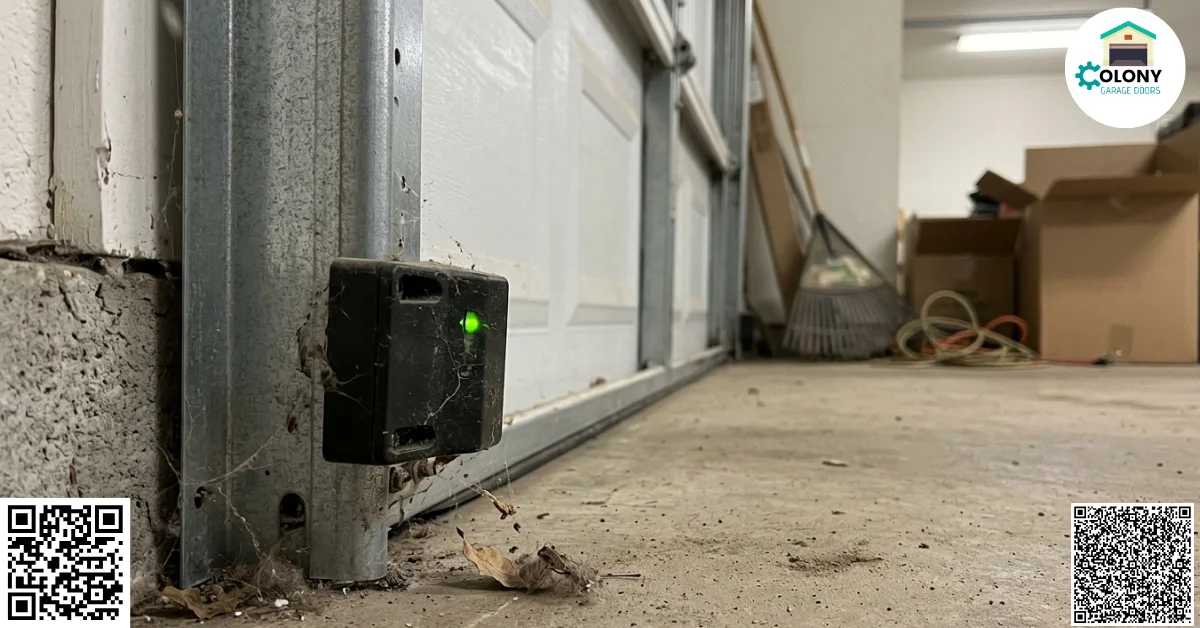
If your door starts closing but suddenly stops and reverses back to the top for no apparent reason, your photo-eye safety sensors are usually the culprit. These are the small electronic eyes located a few inches off the ground on either side of the door.
- Check to see if a small leaf, cobweb, or dirt is blocking the invisible beam.
- Make sure the small LED indicator lights on both sensors are glowing steadily. If one is blinking, it means the sensors have bumped out of alignment and need to be gently nudged back into place by hand.
The Door Feels Incredibly Heavy or Opens Crookedly
If your opener is struggling immensely to lift the door, or if you try to lift it manually and it feels like a 300-pound boulder, your garage door springs are likely worn out or broken. Look closely at the springs mounted on the bar above the door. If you see a clear gap or break in the coils, your spring has snapped. Do not attempt to use the door or the opener; call a professional technician immediately to replace it safely.
For more information on general home maintenance schedules and cost estimates for structural improvements, you can consult the National Association of the Remodeling Industry (NARI) to see how garage upgrades compare to other renovations.
Maintenance Tips to Keep Your New Door Pristine
Once your brand-new system is fully installed, performing a few simple maintenance tasks twice a year will ensure it runs perfectly for decades.
1. Perform a Monthly Visual Inspection
Stand inside your garage with the door closed and take a close look at all the moving components. Look for frayed steel cables, loose structural bolts, rusted hinges, or bent rollers. If you see anything that looks loose or worn down, call your local technician to tune it up before a component fails.
2. Keep the Moving Parts Well Lubricated
Never use thick WD-40 or heavy grease on your garage door tracks, as these products attract airborne dirt, dust, and grime, creating a thick paste that clogs up the rollers. Instead, use a high-quality, professional-grade silicone or lithium spray lubricant. Lightly spray all the metal hinges, roller bearings, springs, and top locks every six months to keep everything sliding effortlessly.
+-----------------------------------------------------------------+
| DO NOT USE WD-40 ON TRACKS! |
| Standard WD-40 is a degreaser, not a long-lasting lubricant. |
| It attracts dirt, grit, and dust, which will wear down your |
| rollers. Always use specialized silicone or lithium spray. |
+-----------------------------------------------------------------+
3. Test the Balance of Your Door
At least twice a year, test the balance of your door. Pull the red emergency release cord while the door is fully closed to disconnect it from the automatic opener. Lift the door up by hand to about waist height and let go.
If the door stays perfectly in place or hovers gently, your springs are in fantastic shape. If the door instantly crashes violently to the floor or flies upward rapidly, the springs have lost their tension or are wound too tightly, and they need to be professionally adjusted.
4. Wash and Clean the Exterior Panels
Keep your home looking beautiful by washing your garage door panels with a soft cloth, warm water, and mild dish soap at least once a year. This removes accumulated road salt, dirt, pollen, and harsh chemical residues from the paint, keeping the finish bright and beautiful under the hot Texas sun.
To learn more about product safety standards, material testing, and consumer alerts for major home appliances, visit the official U.S. Consumer Product Safety Commission (CPSC) website for up-to-date home safety resources.
Frequently Asked Questions (FAQs)
How long does a standard professional garage door installation take to complete?
A standard single or double-car garage door installation usually takes a professional crew between 3 to 5 hours to finish completely from start to finish. This timeframe includes taking down your old door structure, installing all new tracks and springs, and setting up your automatic opener system perfectly.
Can I replace just the damaged bottom section of my garage door, or do I have to buy a whole new door?
Yes, it is often possible to replace just one damaged panel if the manufacturer still produces that specific door model and style. However, if your door is more than ten years old, it is usually more cost-effective to replace the entire system because matching older paint fade and tracking down discontinued sections can be difficult.
Why does my garage door make a loud popping or banging sound when it opens during cold mornings?
Loud popping sounds are typically caused by the metal coils of your torsion spring binding together or sticking to the steel shaft when the temperature drops, causing materials to contract slightly. Applying a high-quality garage door silicone spray directly across the entire length of the spring coils will usually resolve this noise immediately.
What is the standard lifespan of modern garage door torsion springs before they need to be replaced?
Standard garage door torsion springs are engineered to last for roughly 10,000 open-and-close cycles, which typically equates to about 6 to 10 years of normal daily family use. If you use your garage door constantly as the primary entrance to your home, you can upgrade to high-cycle extended life springs that are rated to last for 25,000 to 50,000 cycles.
Final Thoughts
Upgrading your home with a modern garage door installation is one of the quickest, most rewarding ways to transform your property’s curb appeal, boost its overall market value, and lower your monthly energy costs. From gorgeous full-view glass designs to ultra-durable faux-wood steel composites, there is a perfect style to match every taste and budget in Sugar Land.
Remember, because of the extreme mechanical tensions involved in these heavy systems, you should always trust your installation, spring winding, and major structural adjustments to an experienced, licensed professional. Take care of your new door with basic regular maintenance, and it will keep your home secure, insulated, and beautiful for many years to come.
How Can Colony Garage Doors Help You?
If you are ready to elevate the look and security of your property with a beautiful, modern garage door installation, Colony Garage Doors is here to bring your vision to life. With years of dedicated hands-on experience serving our local Texas communities, we pride ourselves on providing top-tier craftsmanship, fair pricing, and friendly, dependable local service.
Do not settle for a loud, ugly, or unreliable door any longer. Give our expert local team a call today or come stop by our Sugar Land location to discuss your project, explore premium design options, and get your free customized quote!
- Company Name: Colony Garage Doors
- Business Address: 16535 Southwest Fwy Unit A, Sugar Land, TX 77479
- Phone Number: (832) 345-9267
